Growth of Data Centers Expected To Drive the Market
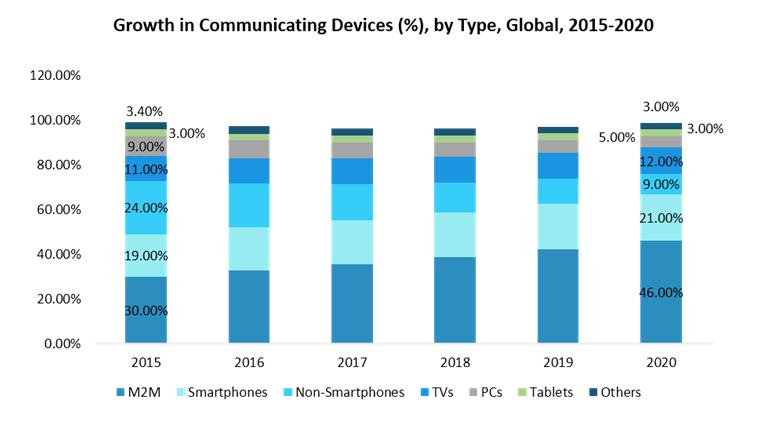
By offering benefits in terms of cost savings and high-speed data transmission benefits, compared to copper cables, the usage of fiber optic cables is becoming evident across data centers. The increasing consumption of social networking sites, videos, and other consumer apps, signifies the considerable demand for data. The forecasts regarding the number of connected devices by Cisco also provides insights on the potential data demand. Owing to the data demands across consumers and enterprises, the average number of data centers is estimated to be 10.3 per organization, in three years from 2017, up from 8.1 per organization, according to the Data Center World Global Conference. The rising data center growth considering the connected devices and data storage, the need for high-speed data transfer augments the adoption of the fiber optic cables.
Asia-Pacific Expected to Grow At a Substantial Rate
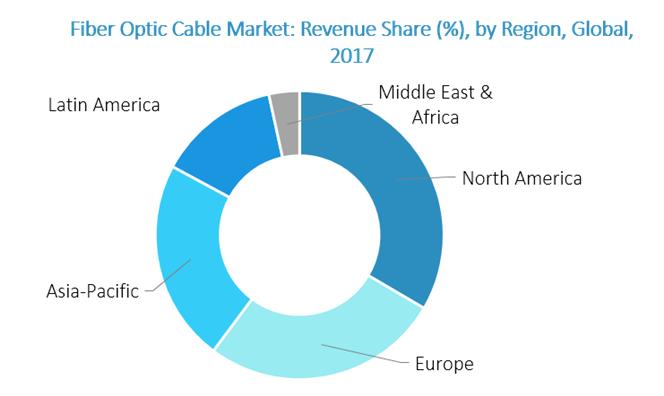
With increasing activity in data centers, due to the potential growth of the end-user industries and enterprises slowly shifting toward SaaS applications, the use of fiber optic cables is expected to increase in the region, over the forecast period. The forecasted data center loads and cloud computing instances provided by Cisco, in its Global Cloud Index, indicate the scope for the adoption of fiber optics, across data centers in the region. Also, the consistent rise in the use of smartphones and internet facilities in the region contributes to the adoption of optical fiber cables, for telecommunication applications. 5G connections (excluding IoT) are anticipated to reach USD 670 million in Asia-Pacific, by 2025, accounting for approximately around 60% of the global 5G connections, according to GSMA. Investments in 5G mobile technologies in Asian markets, such as China, Japan, and South Korea, are driving the development of 5G mobile technologies, which are expected to pave the way for new opportunities, in the fiber optic cable market.